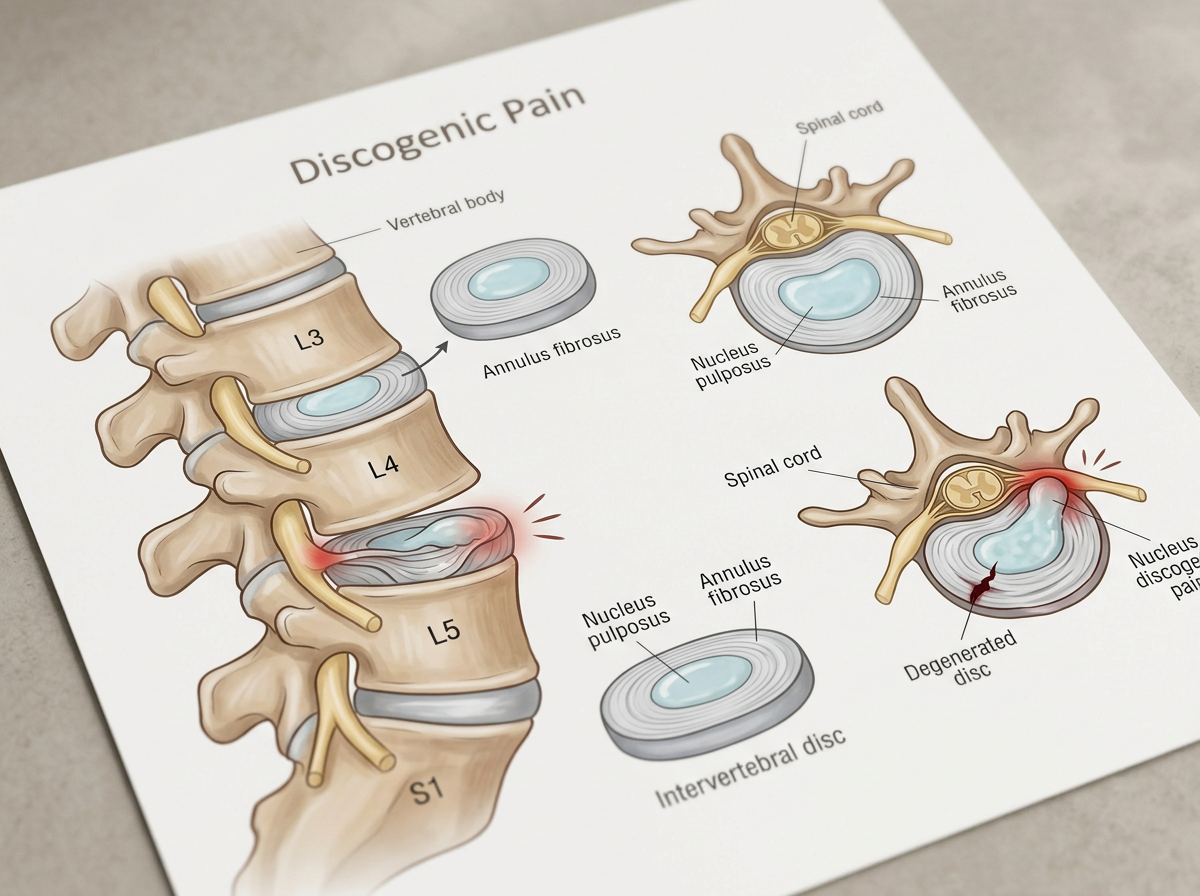
Discogenic Pain Management
Discogenic pain originates directly from damage or degeneration of an intervertebral disc within the spine. Whether caused by an acute annular tear, disc bulge, or age-related disc degeneration, targeted evidence-based chiropractic care focuses on reducing disc mechanical stress, restoring spinal motion, and supporting structural recovery.
In short: Spirit Chiropractic in Parramatta, NSW treats discogenic pain caused by disc bulges, herniations, annular tears and degenerative disc disease, using a five-step process of screening, diagnosis, hands-on care, spinal decompression and rehab, and long-term ergonomic support.
Contributing Factors & Symptoms
Common Causes
- Annular tears or micro-trauma within intervertebral disc fibers
- Disc bulges, herniations, or height loss (degenerative disc disease)
- Improper lifting mechanics or sudden rotational compressive loads
- Prolonged sitting placing high mechanical pressure on spinal discs
- Core muscular weakness failing to support axial loading
- Repetitive flexion and spinal strain
Common Symptoms
- Deep, central aching in the lower back or neck area
- Pain that worsens significantly with sitting, bending, or coughing
- Discomfort relieved by lying down or gentle extension movements
- Sharp, catching sensations when transitioning from sitting to standing
- Radiating pain into the hips, thighs, or buttocks
- Persistent spinal stiffness and reduced flexibility
Evidence-Based Management Approach
Spirit Chiropractic takes a patient-centred approach to managing discogenic pain. Treatment is always preceded by a thorough assessment to ensure the right care plan for your specific needs.
Comprehensive Screening
A detailed evidence-based clinical evaluation to determine disc involvement, including spinal range of motion, neurological testing, disc load tolerance exams, and referral for diagnostic imaging if required.
Diagnosis & Care Plan
Identification of the specific disc segment causing your pain. We build a personalized care plan outlining gentle non-rotational care, decompression techniques, and clear recovery milestones.
Hands-On Chiropractic Care
Tailored low-force adjustments, traction mobilization, and targeted soft-tissue therapy aimed at reducing intradiscal pressure, relieving surrounding muscular spasm, and restoring segmental joint movement.
Spinal Decompression & Rehab
Directional preference exercises (e.g., extensions) combined with core stabilization routines to promote fluid movement into the disc and protect against shear forces.
Long-Term Resilience & Ergonomics
Ongoing monitoring of your functional healing, paired with workstation ergonomic adjustments and lifting mechanics education to preserve long-term disc health.
What to Expect
Your first visit includes a thorough clinical evaluation to identify which disc segment is involved and rule out anything requiring urgent referral. Care starts gentle and low-force, with directional exercises and core work introduced as your spine tolerates load. Most patients notice gradual improvement over several weeks with a structured, phased recovery plan.
Frequently Asked Questions
Can a chiropractor help with a disc bulge or herniation?
Yes. Chiropractors assess which disc segment is involved, then use gentle, non-rotational adjustments, traction mobilisation and directional preference exercises to reduce mechanical pressure on the disc and support recovery.
What does discogenic pain feel like?
Discogenic pain typically presents as a deep, central ache in the lower back or neck that worsens with sitting, bending or coughing, and is often relieved by lying down or gentle extension movements.
Is chiropractic care safe for a degenerated or bulging disc?
Yes, when guided by a thorough assessment and appropriate imaging referral where needed. Care is typically low-force and progresses gradually, focused on reducing disc load and rebuilding core support rather than aggressive manipulation.
How long does it take to recover from discogenic back pain?
Recovery time depends on the severity of disc involvement, but many people see gradual improvement over several weeks with a structured plan combining hands-on care, directional exercises and ergonomic changes.
Do I need a referral to see a chiropractor for disc-related back pain?
No referral is required in Australia to book a chiropractic consultation. You can book directly online.
Can a bulging disc heal?
Many disc bulges and herniations shrink over months, and symptoms often improve even when a scan doesn't change. Disc bulges are also common in people with no pain at all, so a scan finding on its own doesn't mean something is badly wrong.
Is a disc bulge serious?
Usually not. Most disc-related back and leg pain improves with time, movement and exercise. It becomes urgent if you have loss of bladder or bowel control, numbness in the groin, or leg weakness that is getting worse.
What should you not do with a bulging disc?
Avoid long bed rest and long periods of sitting without breaks. Don't stop moving out of fear, but build back up gradually with bending and lifting. Ease off any stretch or exercise that sends pain further down your leg.
Can a chiropractor push a bulging disc back in?
No. A disc can't be pushed back into place. Care aims to ease pain and improve movement while the disc settles, combined with exercise and advice.
Is chiropractic care for a disc bulge covered by Medicare?
Medicare can cover part of the cost if your GP decides you have a chronic condition (usually present for six months or more) and refers you under a GP Chronic Condition Management Plan. It covers up to 5 allied health visits a year, shared across all allied health services. At Spirit Chiropractic, returning plan visits are bulk billed and the first plan visit has a gap. Private health extras may also cover part of a consultation, but not for the same visit as Medicare.
How much does a chiropractor cost for a disc bulge, and can I book on a weekend?
At Spirit Chiropractic a first (comprehensive) consultation is $150 for 50 minutes, standard follow-up consultations are $90 (20 minutes) and short consultations are $60 (10 minutes). We're open Monday, Wednesday, Friday and Saturday, 10am to 6pm, so Saturday appointments are available. We don't offer after-hours appointments.
Ready to Start Your Recovery?
Book a consultation with Spirit Chiropractic today to address your discogenic pain and receive personalized, evidence-based care.
Book A Consultation