Lower Back Pain
Lower back pain is the leading cause of disability worldwide. In 2020 roughly one in 13 people — about 619 million people — experienced it, and cases rose 60% between 1990 and 2020
If your back is hurting right now, that statistic is not much comfort. What tends to help more is understanding three things: what is likely to be causing it, what usually happens next, and what actually changes the course of it.
That's what this page covers, and it's how we work at Spirit Chiropractic. Pain is a symptom, not a diagnosis.
What's usually going on
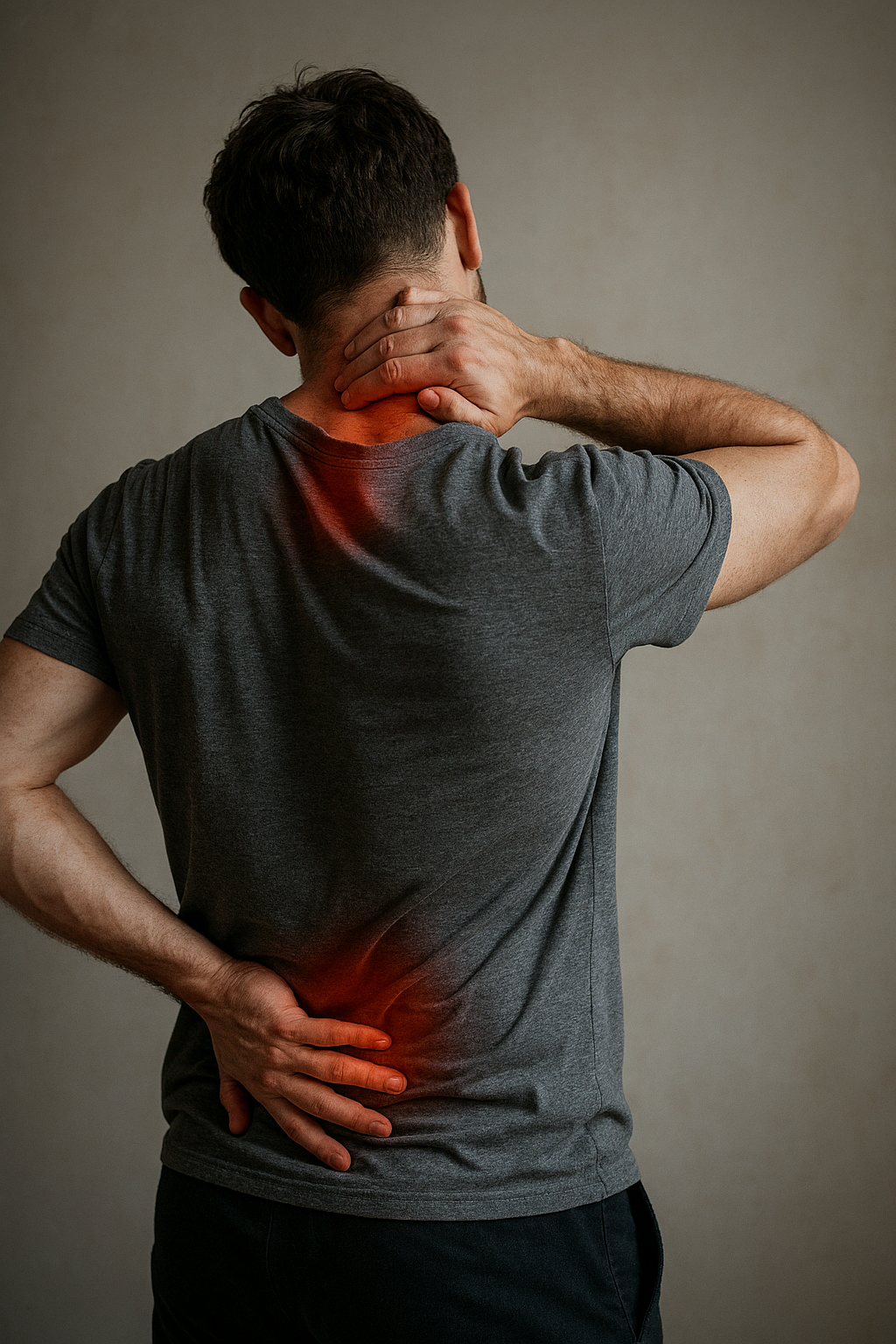
Serious underlying causes are rare. More than 95% of low back pain presentations have no serious underlying cause.
That doesn't mean nothing is wrong. It means the pain is usually coming from the ordinary structures of your lower back — the joints, discs, muscles, ligaments, and nerves — rather than from disease. This is often called non-specific low back pain, and for chronic low back pain lasting more than three months, chronic primary low back pain is estimated to make up at least 90% of presentations seen in primary care.
Several of these usually operate together, which is why "what's causing it" and "where it hurts" are often different questions.
Factors beyond the tissue also matter, and the Australian care standard is explicit that these should be assessed early: what you believe is happening, how worried you are, how the pain is affecting your work and sleep, whether you're avoiding activity because you think it's harmful, and whether you're under significant stress. These are not a suggestion that the pain is "in your head". They are known predictors of how quickly people recover, so ignoring them means managing half the problem.
Lumbar Facet Joint Irritation
Localised, sharp or aching pain that worsens with extension, twisting, or prolonged standing. Often described as “pinching,” “catching,” or “locking.”
Disc‑Related Pain (depending on severity of disc herniation)
Deep, aching pain that may radiate into the buttock, hip, or thigh. Often aggravated by sitting, bending, or lifting.
Muscle Strain & Postural Overload
A dull, tight, fatigued feeling across the lower back. Common in desk workers, manual workers, and people under stress.
Sacroiliac Joint Dysfunction
Pain on one side of the lower back or buttock, often aggravated by standing, walking, or transitional movements.
Movement Pattern Dysfunction
Pain caused by poor hip mobility, weak glutes, or overactive lumbar extensors. Often seen in gym‑goers, runners, and people with sedentary jobs.
How we assess it
We don't treat "back pain". We work out which structures are involved, what is loading them, and whether anything needs to be ruled out first. Assessment focuses on screening for serious pathology, a targeted history, physical examination, a focused neurological examination where appropriate, and consideration of the psychosocial factors above. In practice, that looks like this.
A detailed history — how it started, what makes it better and worse, previous episodes, medical history, medications, your work and training demands, sleep, and how the pain is affecting what you actually need to do.
Physical and postural assessment — how you move, where range is restricted, palpation for tenderness and muscle tone, and how load transfers through your hips, pelvis, and thoracic spine.
Orthopaedic and neurological testing — targeted tests of joints, muscles, ligaments, discs, and nerve pathways. Where there's any suspicion of nerve involvement, this includes straight leg raise, reflexes, strength, and sensation testing .
A clear explanation — what we think is driving it, what we're not concerned about, and what we expect to change and when. You can do this in a single 50-minute visit if you're in acute pain and want treatment on day one. Followed up by report of findings where we walk you through the diagnosis and plan before starting care. Details are on our services page.
Do you need a scan?
Usually not, and there are good reasons to be cautious about it.
The guidelines both advise against routine imaging for non-specific low back pain in the absence of red flags. The concern isn't only radiation. It's that scans of pain-free adults very commonly show disc bulges, degeneration, and other age-related changes. When those findings get attached to your pain, they can cause real anxiety, encourage you to protect your back more than you need to, and occasionally lead to procedures that were never going to help.
Imaging is genuinely useful when there's a clinical reason for it — suspected fracture, suspected infection or tumour, significant trauma, progressive neurological signs, or a picture that isn't behaving the way it should If your presentation warrants X-ray, CT, or MRI, we will request it before starting care rather than after, and we'll explain exactly what question we're trying to answer with it.
How We address Lower Back Pain
Lumbar spinal mobilisation (gentle, low‑force techniques) These are slow, comfortable movements that help the lower back joints loosen up and move more freely.
Spinal adjustments (HVLA) for joint restriction A quick, precise movement to a stiff joint to help it move better and reduce irritation.
PIR & PNF muscle release techniques Gentle stretching and muscle‑activation methods that help tight muscles relax and switch off protective tension.
Sacroiliac joint mobilisation Targeted, low‑force movements to help the SI joints glide better and reduce pressure in the lower back and pelvis.
Postural and ergonomic strategies Simple changes to how you sit, stand, lift, or set up your workspace to reduce strain on your back.
Rehabilitation training (core, glutes, hip mobility) Exercises that strengthen the muscles supporting your spine and improve the way your hips and pelvis move.
Education on triggers and self‑management Helping you understand what sets your pain off, what calms it down, and how to manage flare‑ups confidently at home.
-
Freitas JP, Corrêa LA, Bittencourt JV, Armstrong KM, Meziat‑Filho N, Nogueira LAC. One spinal manipulation session reduces local pain sensitivity but does not affect postural stability in individuals with chronic low back pain: a randomised, placebo‑controlled trial. Chiropr Man Therap. 2024;32:20.
Goertz CM, Long CR, Vining RD, Pohlman KA, Walter J, Coulter I, et al. Effect of usual medical care plus chiropractic care vs usual medical care alone on pain and disability among US service members with low back pain: a comparative effectiveness clinical trial. JAMA Netw Open. 2018;1(1):e180105.
Nim CG, Weber KA, Kawchuk GN, O’Neill S. Spinal manipulation and modulation of pain sensitivity in persistent low back pain: a secondary cluster analysis of a randomized trial. Chiropr Man Therap. 2021;29:10.
Rubinstein SM, de Zoete A, van Middelkoop M, Assendelft WJJ, de Boer MR, van Tulder MW. Benefits and harms of spinal manipulative therapy for chronic low back pain: a systematic review and meta‑analysis. BMJ. 2019;364:l689.
Traeger AC, Buchbinder R, Elshaug AG, Croft PR, Maher CG. Care for low back pain: can health systems deliver? Best Pract Res Clin Rheumatol. 2019;33(3):477‑490.