How Chiropractic Spinal Manipulation May Help Reduce Spine Pain — What the Science Says
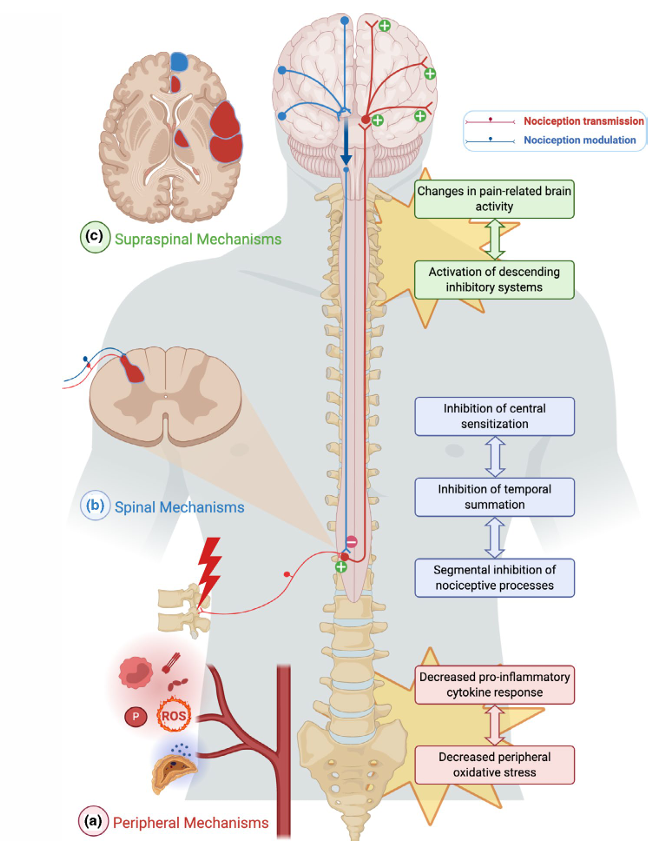
Figure 1: Pain mechanism likely influenced with spinal manipulation (adjustments).
Sourced: https://onlinelibrary.wiley.com/doi/10.1002/ejp.1773
Neck pain and back pain are now the leading cause of disability worldwide. They steal sleep, energy, confidence, and joy from millions of people — often quietly, slowly, and without warning.
A major 2021 review published in the European Journal of Pain explored how chiropractic spinal manipulation (SM) may help reduce spine pain. Instead of focusing on bones or posture alone, this paper looked at the neurophysiology — the way your nerves, spinal cord, and brain respond to treatment.
Here’s what the research suggests, in human language.
Pain Is More Than a “Sore Spot” — It’s a Nervous System Story
Spine pain can come from muscles, joints, discs, ligaments, or even irritated nerves. But in most cases, especially chronic ones, the exact source isn’t clear. The paper explains:
“Chronic low back and neck pain are considered non‑specific in a large majority of cases.”
This means the pain isn’t caused by a single damaged structure — it’s a system problem, not a single‑tissue problem.
Your nervous system plays a huge role in how pain is created, amplified, and relieved.
What Is Spinal Manipulation?
Spinal manipulation (SM) — often called a chiropractic adjustment — is a quick, precise thrust applied to a spinal joint. It’s designed to:
Improve joint motion
Reduce irritation
Influence the nervous system
Support normal movement patterns
The paper notes that SM affects paraspinal muscles, joint capsules, ligaments, and sensory nerve endings, all of which send information to your spinal cord and brain.
How Spinal Manipulation May Reduce Pain
The review highlights three major levels where SM may influence pain:
1. Peripheral Mechanisms (Local Tissue Effects)
These are changes happening in the tissues around the painful area.
Reduced inflammation
Some studies show SM may decrease certain inflammatory chemicals (like cytokines) that make nerves more sensitive.
Reduced oxidative stress
Oxidative stress can irritate nerves. SM may help reduce reactive oxygen species (ROS), which can calm irritated tissues.
From the paper:
“Spinal manipulation may decrease pro‑inflammatory cytokine responses and oxidative stress.”
Possible hormonal effects
Some studies looked at cortisol (your natural anti‑inflammatory hormone). Results were mixed, so this mechanism is still unclear.
2. Spinal Cord Mechanisms (Segmental Pain Inhibition)
This is where things get interesting.
Your spinal cord acts like a “pain gate.” It decides how much pain information gets sent up to your brain.
SM may help by:
Increasing pressure pain thresholds
Meaning: tissues become less sensitive after manipulation.
Reducing “wind‑up”
Wind‑up is when repeated pain signals make the spinal cord more reactive over time — a key part of chronic pain. SM may reduce this temporal summation.
Calming sensitized nerves
In both humans and animal studies, SM reduced nerve hypersensitivity in the spinal segments where it was applied.
3. Supraspinal Mechanisms (Brain‑Level Effects)
This area is still being explored, but early evidence suggests:
SM may activate descending pain‑inhibiting pathways
These are brain circuits that send “calm down” signals back to the spinal cord.
SM may change pain‑related brain activity
Functional imaging studies show changes in how the brain processes pain after manipulation.
The paper notes:
“Widespread pain inhibition suggests cerebrospinal mechanisms involving the descending inhibitory system.”
What This Means for Patients
Chiropractic spinal manipulation isn’t just about “cracking joints.” It’s about influencing how your entire nervous system processes pain.
Patients often report:
Feeling lighter
Moving more freely
Less stiffness
Better posture
Reduced pain
Improved confidence in movement
These changes make sense when you consider the multi‑level effects SM may have on:
Local tissues
Spinal cord pain gating
Brain pain modulation
What We Still Need More Research On
The review is honest about limitations:
Some studies are small
Placebo controls need improvement
Not all mechanisms are fully understood
Effects can vary between individuals
But the overall message is clear:
Spinal manipulation is a safe, conservative option that may help reduce spine pain through meaningful neurophysiological ffects.
Final Takeaway
Your spine and nervous system are deeply connected. When your spine moves better, your nervous system often works better — and pain can decrease.
Chiropractic care isn’t just about joints. It’s about restoring clarity and control to your body’s pain‑processing systems.
References
Gevers‑Montoro C, Provencher B, Ortega de Mues A, Piché M, Descarreaux M. Neurophysiological mechanisms of chiropractic spinal manipulation for spine pain. Eur J Pain. 2021;25(7):1429‑1448. doi:10.1002/ejp.1773